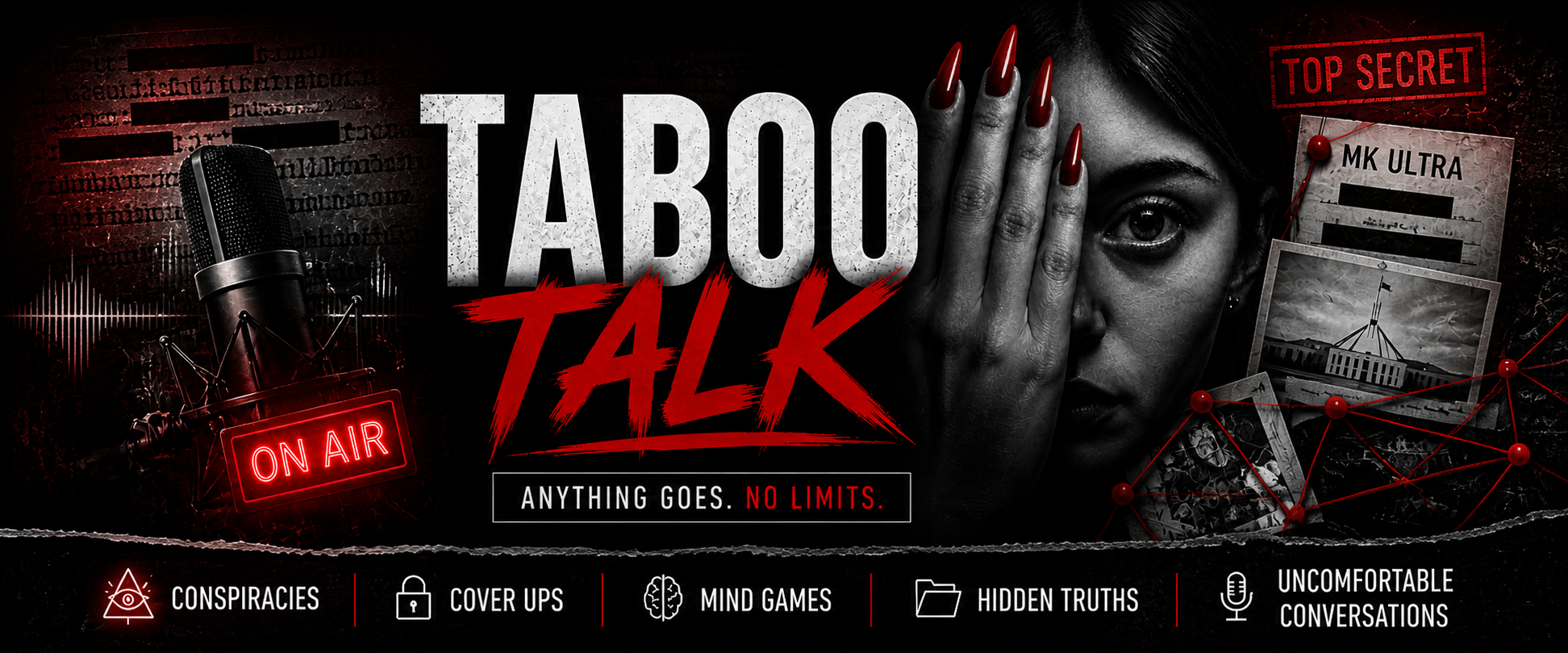
The Occult Intelligence Network: Operation Paperclip, MKULTRA & Australia’s Hidden Cold War Connections
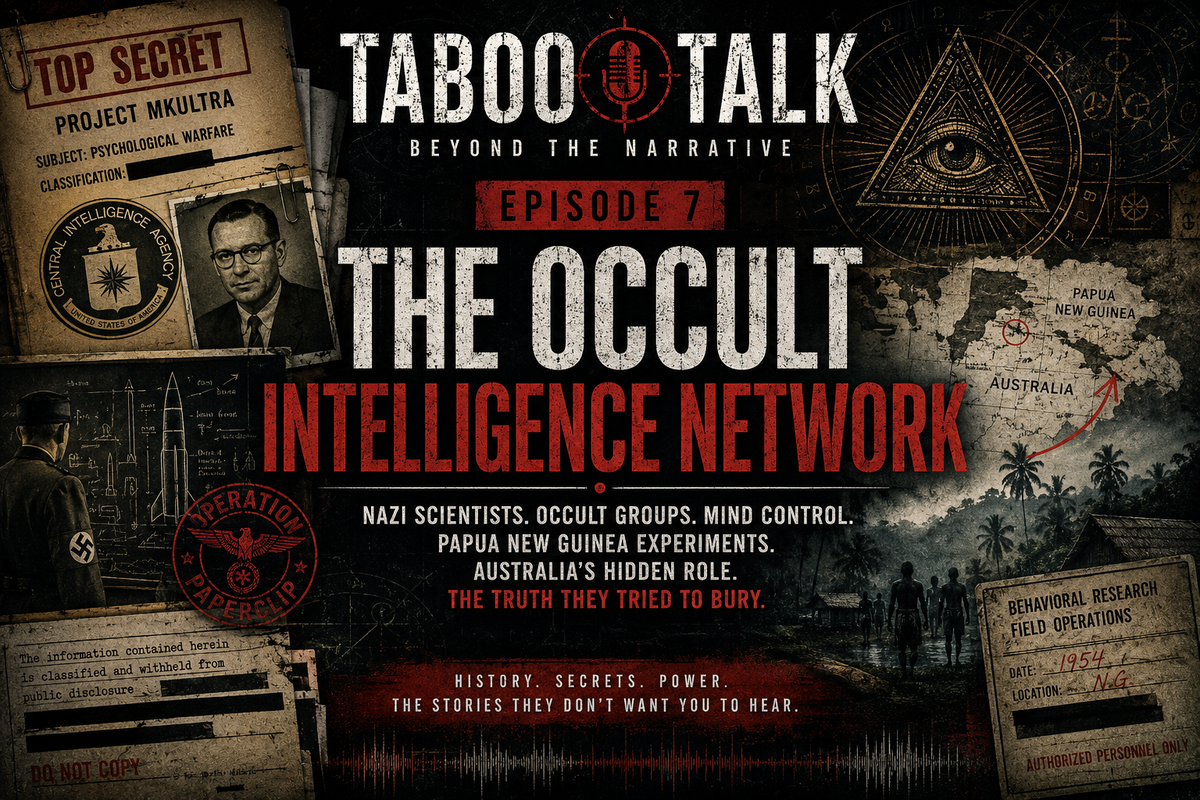
The Cold War Didn’t End the Experiments
When World War Two ended, the experiments didn’t disappear.
They simply changed hands.
Throughout the Cold War, intelligence agencies across the Western world became increasingly obsessed with one terrifying question:
Could the human mind be controlled?
That fear drove decades of psychological research, behavioral experimentation, propaganda studies, and covert intelligence operations — many of which would later become associated with projects like MKULTRA.
But the deeper researchers dig into the historical record, the more one thing becomes clear:
MKULTRA was never just a single experiment.
It was part of a much larger network involving universities, military programs, intelligence agencies, psychiatric institutions, and global research partnerships.
In Episode 7 of Taboo Talk, we investigated one of the most controversial branches of that story — the alleged overlap between Operation Paperclip, Cold War intelligence networks, occult interests, psychological experimentation, and Australia’s hidden role within these expanding behavioral research systems.
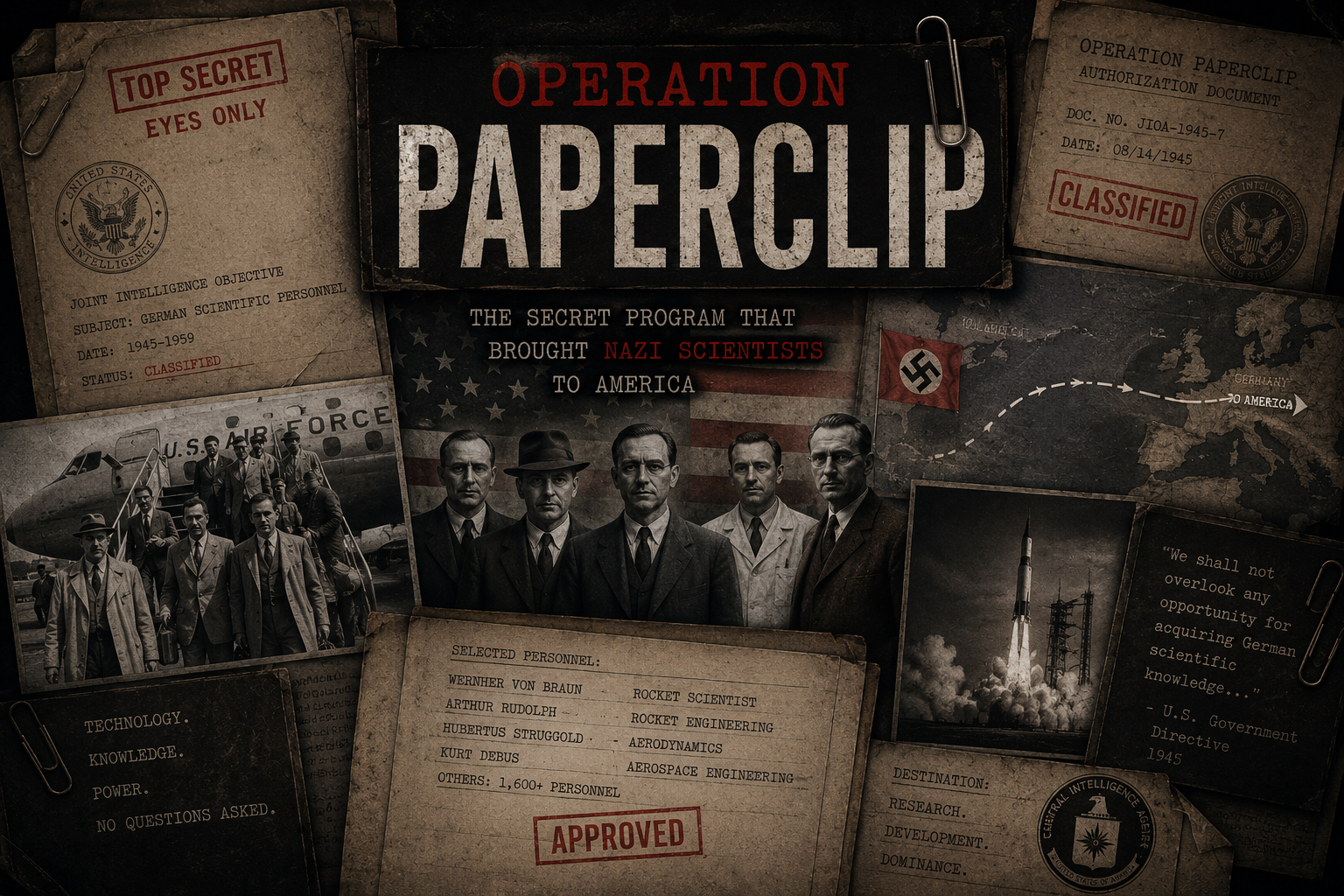
Operation Paperclip & The Transfer of Knowledge
At the end of World War Two, the United States launched Operation Paperclip — a classified program designed to relocate German scientists, engineers, and intelligence specialists into Western research programs before the Soviet Union could secure them first.
Officially, the focus was military and technological advancement.
But psychological warfare research quickly became another major priority.
The Cold War transformed psychology into a strategic weapon. Intelligence agencies feared communist brainwashing, ideological conditioning, and new forms of psychological manipulation capable of reshaping human behavior itself.
As a result, governments poured enormous resources into:
- trauma research
- interrogation methods
- hypnosis
- sensory deprivation
- behavioral conditioning
- propaganda
- and consciousness experimentation
And over time, these programs expanded far beyond secret laboratories.
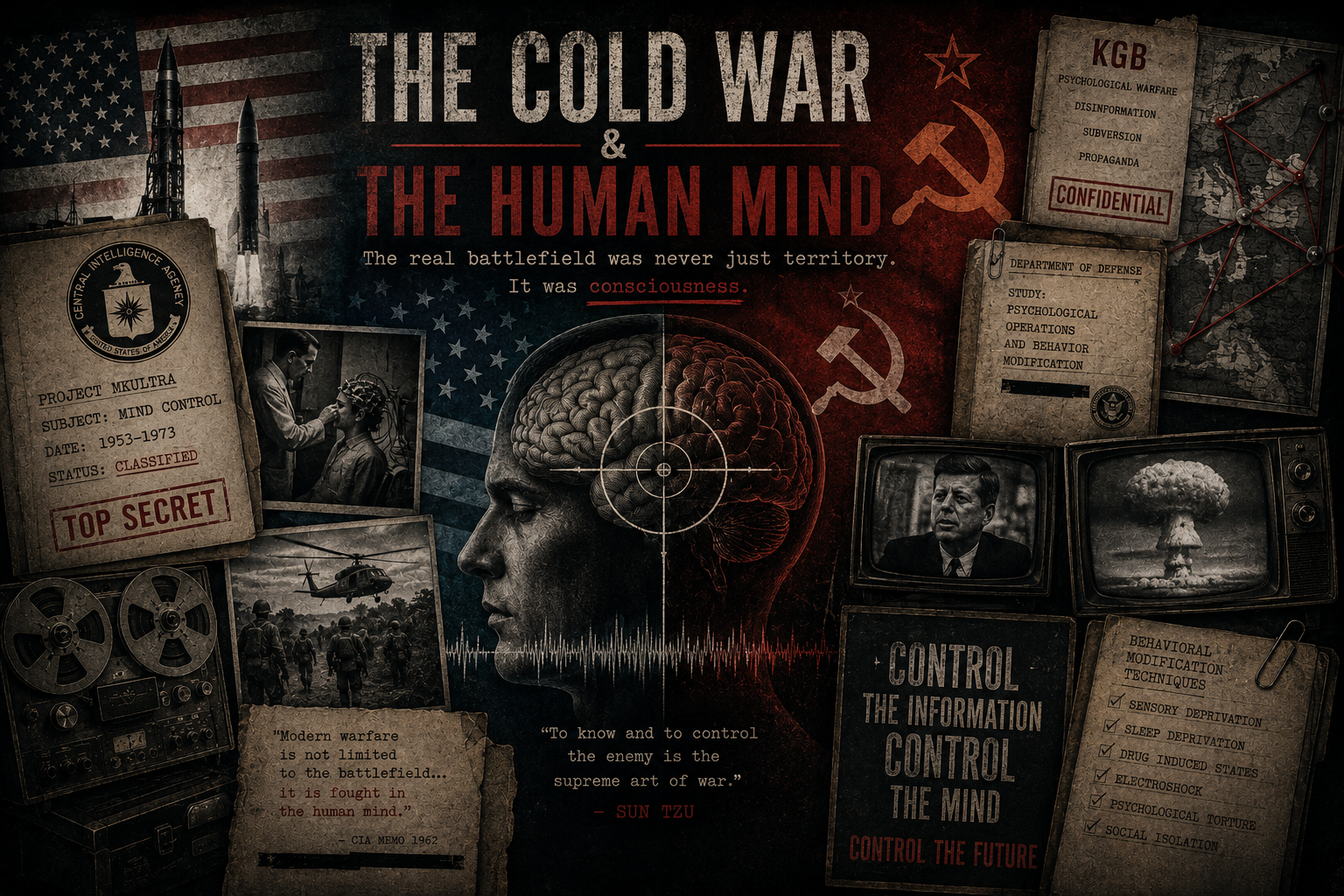
The Intelligence Interest in Consciousness
One of the most controversial aspects of Cold War research involved the growing interest in altered states of consciousness and unconventional psychological experimentation.
While many exaggerated claims exist online, documented government programs did investigate:
- remote viewing
- extrasensory perception
- psychedelic experimentation
- and forms of psychological influence that still sound unbelievable today.
The logic was simple:
If rival nations were exploring unconventional techniques, Western intelligence agencies wanted to understand them too.
As the search for influence intensified, the boundary between science, intelligence, psychology, and fringe experimentation sometimes became dangerously blurred.
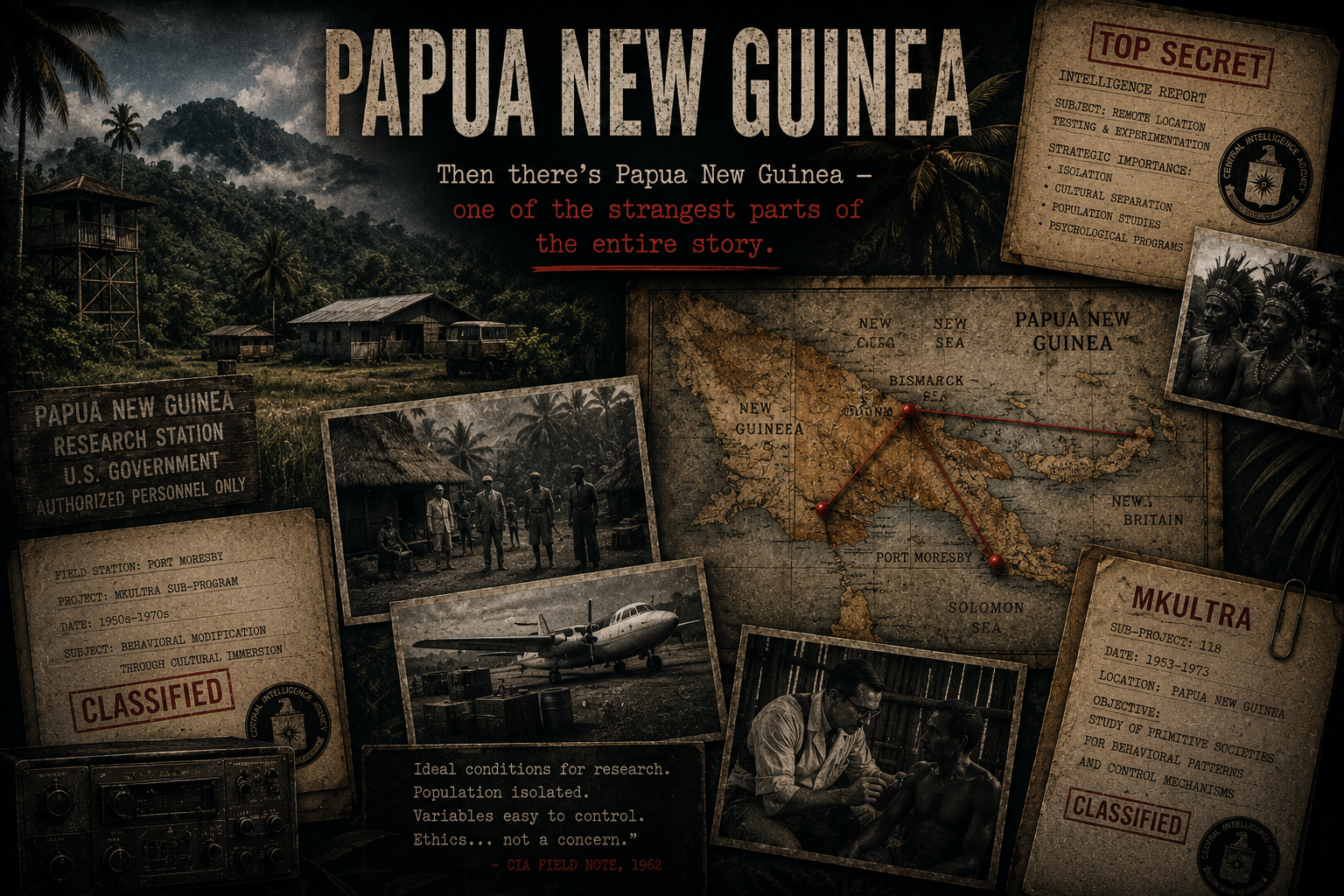
Papua New Guinea & Behavioral Observation
One of the strangest threads connected to this broader story involves Papua New Guinea.
During the mid-20th century, researchers from universities, medical institutions, and anthropological programs increasingly focused attention on remote regions throughout the Pacific.
Some researchers viewed geographically isolated communities as opportunities to study:
- human behavior
- belief systems
- ritual
- trauma
- social conditioning
- and group psychology
While many allegations surrounding intelligence-linked experimentation remain disputed, Cold War behavioral science networks clearly demonstrated enormous interest in understanding how culture and belief could influence human behavior.
And regions outside mainstream Western oversight often became central to controversial research programs.
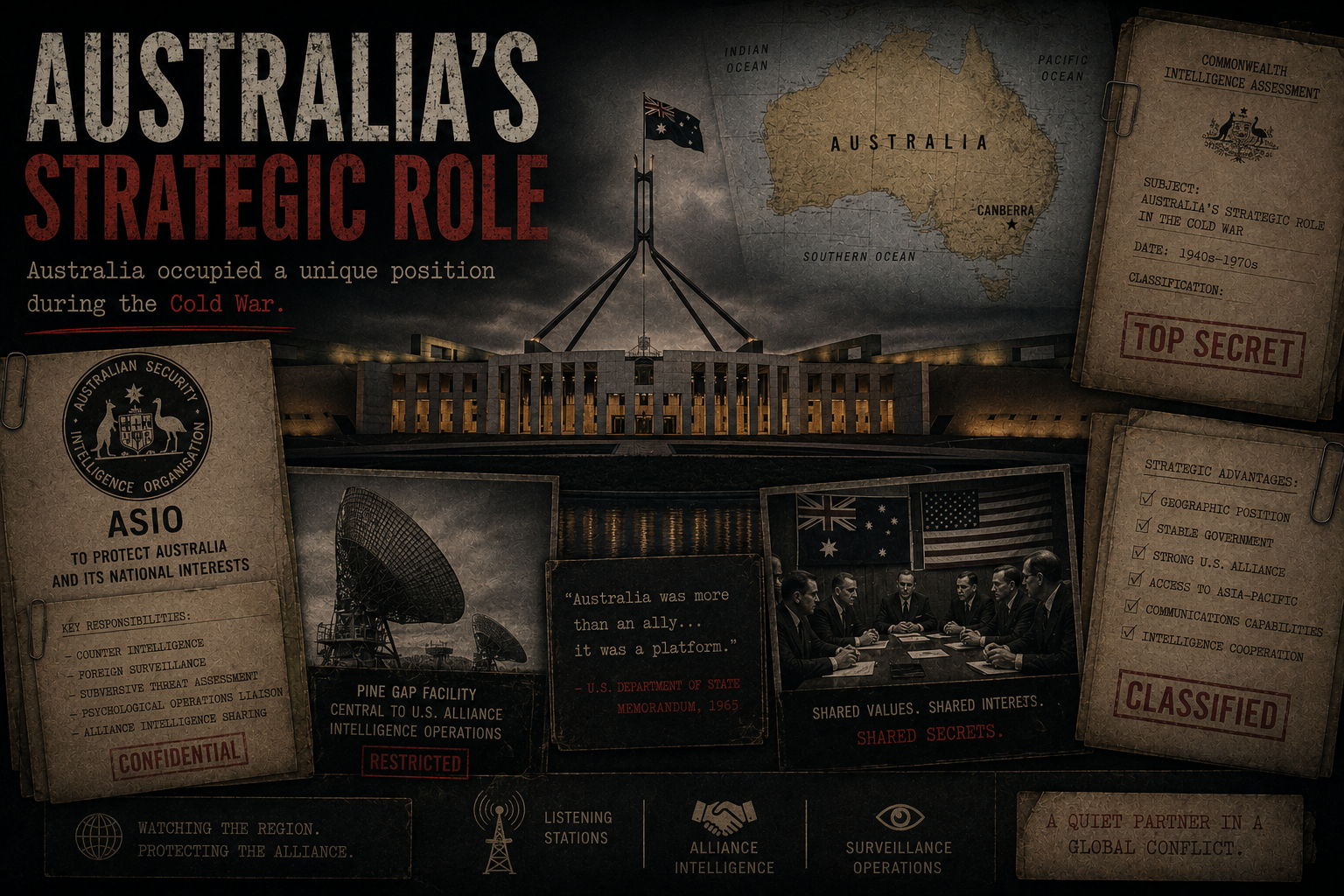
Australia’s Strategic Position During the Cold War
Australia occupied a unique role throughout the Cold War period.
The country maintained close military and intelligence ties with both Britain and the United States while simultaneously expanding its own psychological, psychiatric, and behavioral research infrastructure.
As explored throughout the Taboo Talk MKULTRA series, Australian universities and psychiatric institutions became increasingly connected to broader international behavioral science networks during this era.
Australia’s geographic proximity to Papua New Guinea — combined with its intelligence partnerships and growing academic influence — positioned it at an important intersection of Cold War strategy, psychological research, and regional operations.
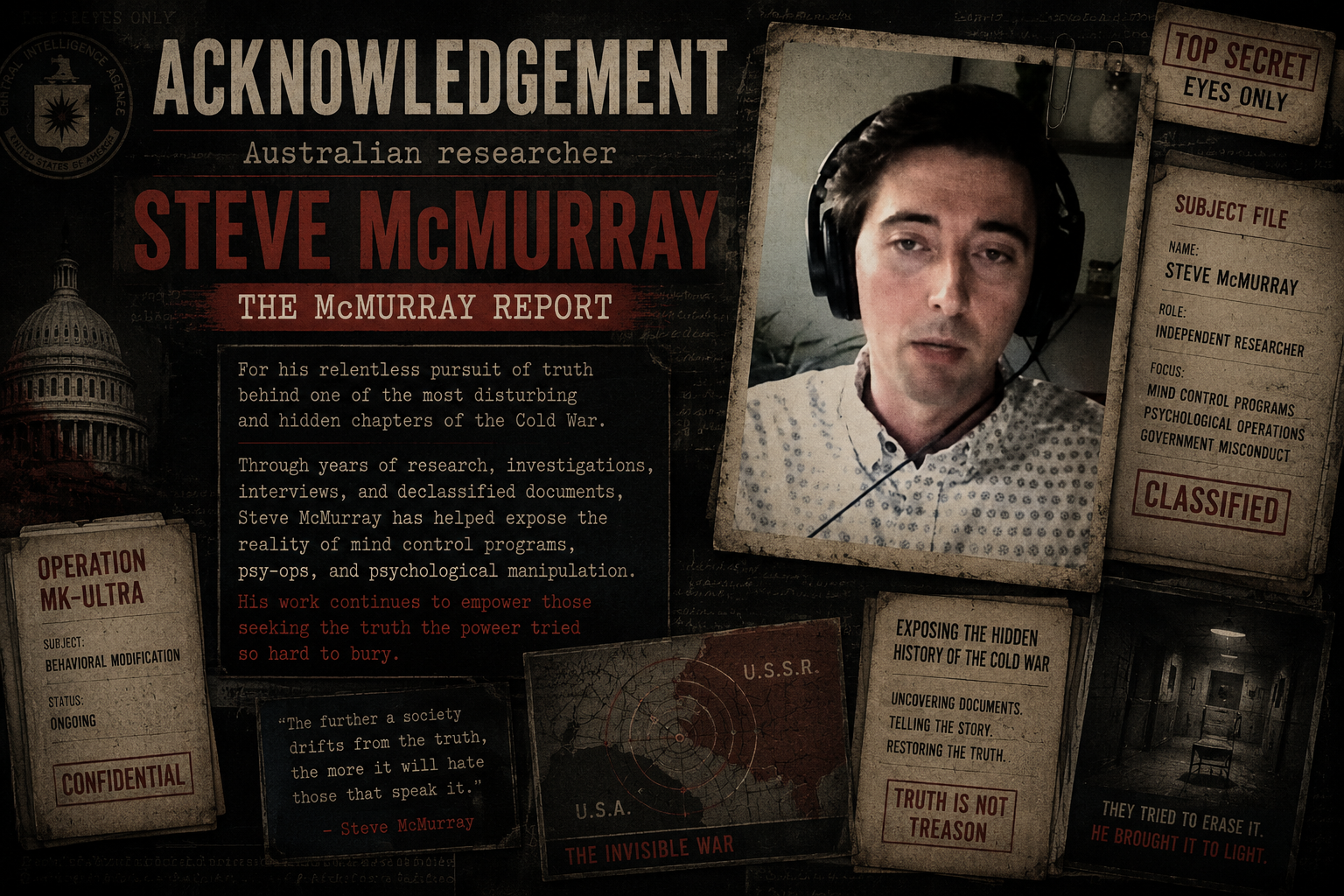
The McMurray Report & Independent Research
A significant amount of modern discussion surrounding MKULTRA in Australia has been shaped by the work of independent Australian researcher Steve McMurray.
Through years of investigation, McMurray explored controversial connections between psychiatric experimentation, intelligence-linked behavioral research, and broader Cold War psychological operations within Australia.
Whether readers agree with every conclusion or not, the McMurray Report remains an important part of the modern conversation surrounding MKULTRA-related research and Australia’s hidden Cold War history.
Taboo Talk acknowledges the importance of independent researchers who continue documenting and preserving these controversial historical discussions.
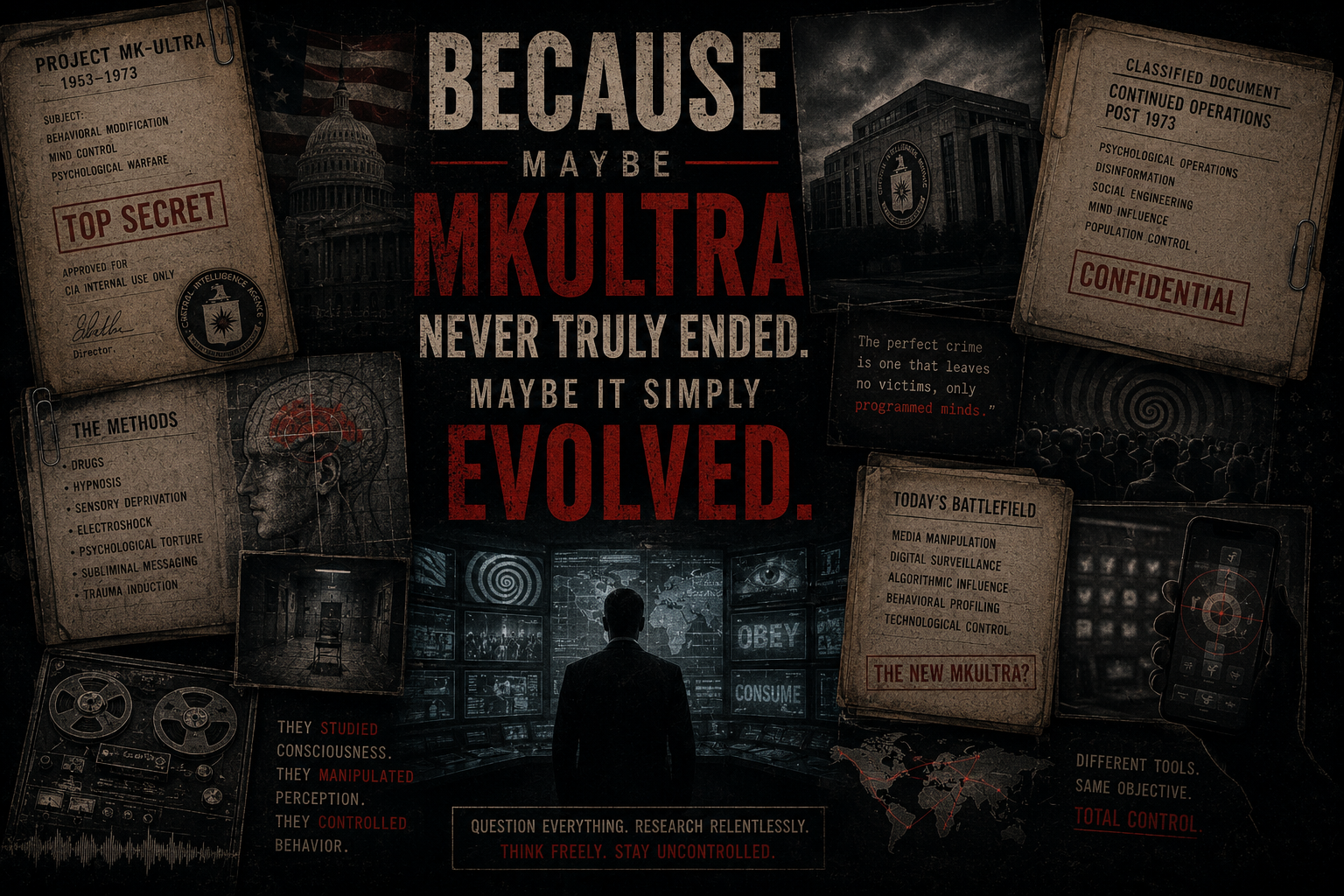
Did MKULTRA Ever Really End?
That may be the biggest question of all.
Because while the original MKULTRA program was officially shut down decades ago, many of the systems developed during the Cold War never truly disappeared.
Behavioral science evolved.
Psychological influence evolved.
Mass media evolved.
And modern society now operates inside systems driven by:
- algorithms
- behavioral targeting
- emotional manipulation
- social conditioning
- and data-driven influence at global scale
Maybe MKULTRA was simply a product of Cold War paranoia.
Or maybe it was the beginning of something much larger.
🎧 Listen to the full episode of Taboo Talk on Spotify and YouTube.
Follow Taboo Talk for more investigations into:
- hidden history
- intelligence operations
- psychological warfare
- conspiracies
- and the stories buried beneath the surface of official narratives.